The Manufacturer Who Realised He Was Spending Half a Day on Quotations That Never Became Orders
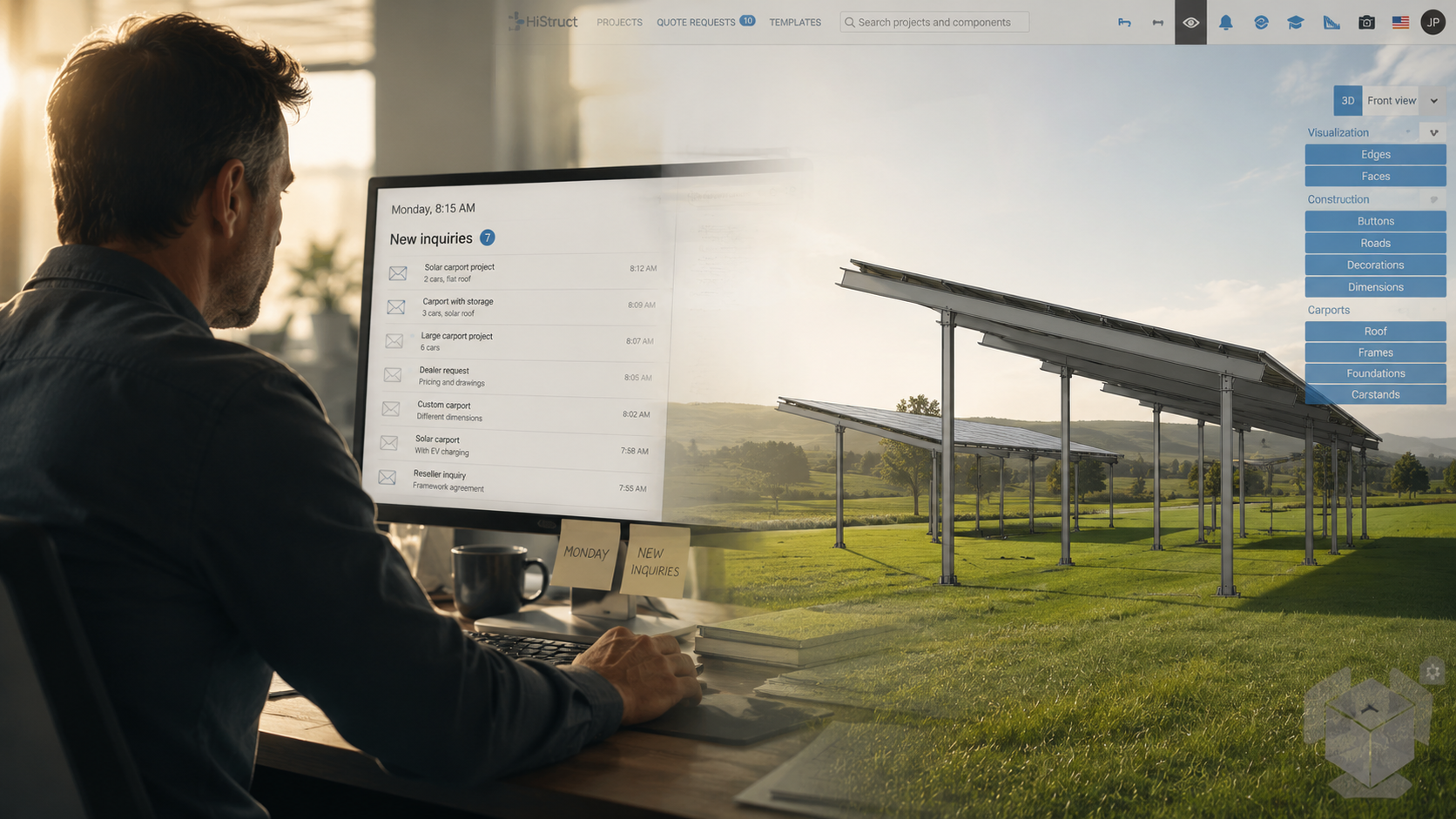
The owner of a solar carport company opened his inbox on Monday morning and found seven new enquiries waiting for him. On paper, that was good news. In practice, it meant several days of drawings, calculations and quotations before a single order was signed.
One customer wanted a carport for two cars.
Then they asked for three.
Then additional photovoltaic panels.
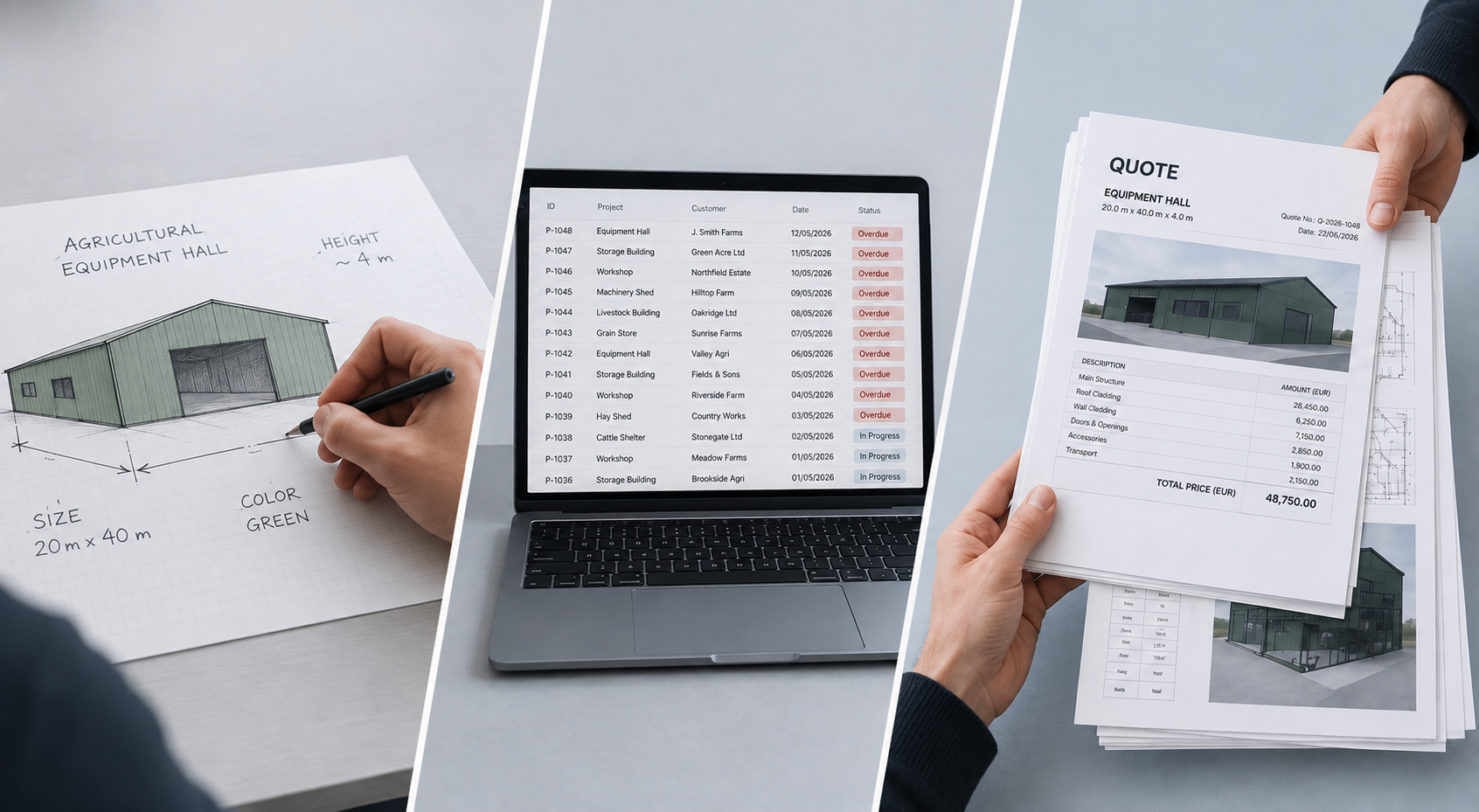
Every change meant a new drawing, a new material calculation and a new quotation.
The owner described it simply:
"Most customers don't buy the first version. They buy the third or fourth one."
That single sentence explained why the team was struggling.
The problem was not finding customers.
The problem was finding enough hours in the week.
When every enquiry becomes a project
Many people imagine that manufacturing companies spend most of their time producing products.
For small manufacturers, a surprising amount of time is spent before production even begins.
A typical enquiry required:
- preparing a layout
- calculating material quantities
- checking pricing
- creating customer documentation
- revising the proposal after customer feedback
None of these tasks were particularly difficult. Together, they consumed hours.
The company was winning projects and growing steadily, but growth created a new problem. Every additional enquiry generated more office work.
At some point the owner faced a decision familiar to many growing manufacturers.
Should he hire another person? Or should he find a different way to handle enquiries?
Scaling the process was the challenge.
When we mapped the workflow together, we discovered something interesting.
The company had simply reached the limits of a process that had worked perfectly well when they were smaller.
Customer information arrived by email.
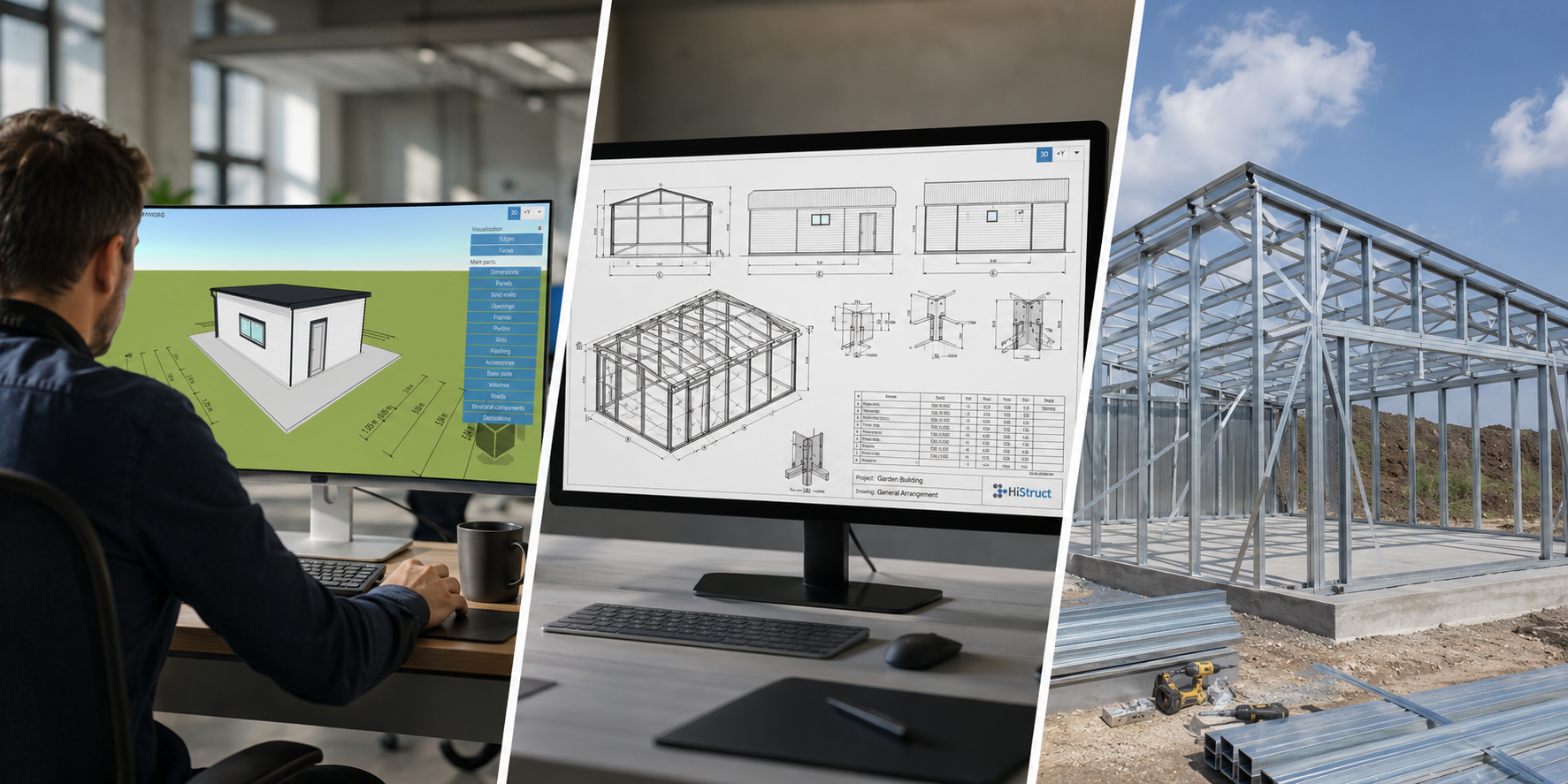
Drawings were prepared manually in AutoCAD or Solidworks.
Material quantities were calculated separately in MS Excel.
Prices were checked against spreadsheets.
Documentation was assembled from multiple sources.
The challenge appeared when twenty, thirty or fifty enquiries needed attention at the same time. The workload grew faster than the team.
A product is usually more complex than it first appears
At the beginning, the product seemed straightforward. A carport has a width, a length., a roof, a number of photovoltaic panels and afew optional accessories.
Then the details started emerging. Certain spans required different structural members. Panel layouts depended on dimensions. Some options could only be combined with specific roof types. Certain configurations changed installation requirements and others affected pricing.
Within a few itterations, dozens of rules had appeared. The rules were not new, the company had been using them for years. The difference was that most of them existed only in the experience of the people preparing projects.
One of the unexpected benefits of these projects is that manufacturers often gain a clearer picture of their own products. Rules that were previously passed from person to person become visible, documented and repeatable.
What happened after launch
The goal was never to replace people. The goal was to make better use of their time.
☑️ Customers could explore different carport configurations on their own.
☑️ Installation partners could prepare initial concepts without waiting for someone in the office.
☑️ Material quantities, drawings and quotation inputs came from the same source.
The team still reviewed projects and spoke with customers. The team still made commercial decisions.
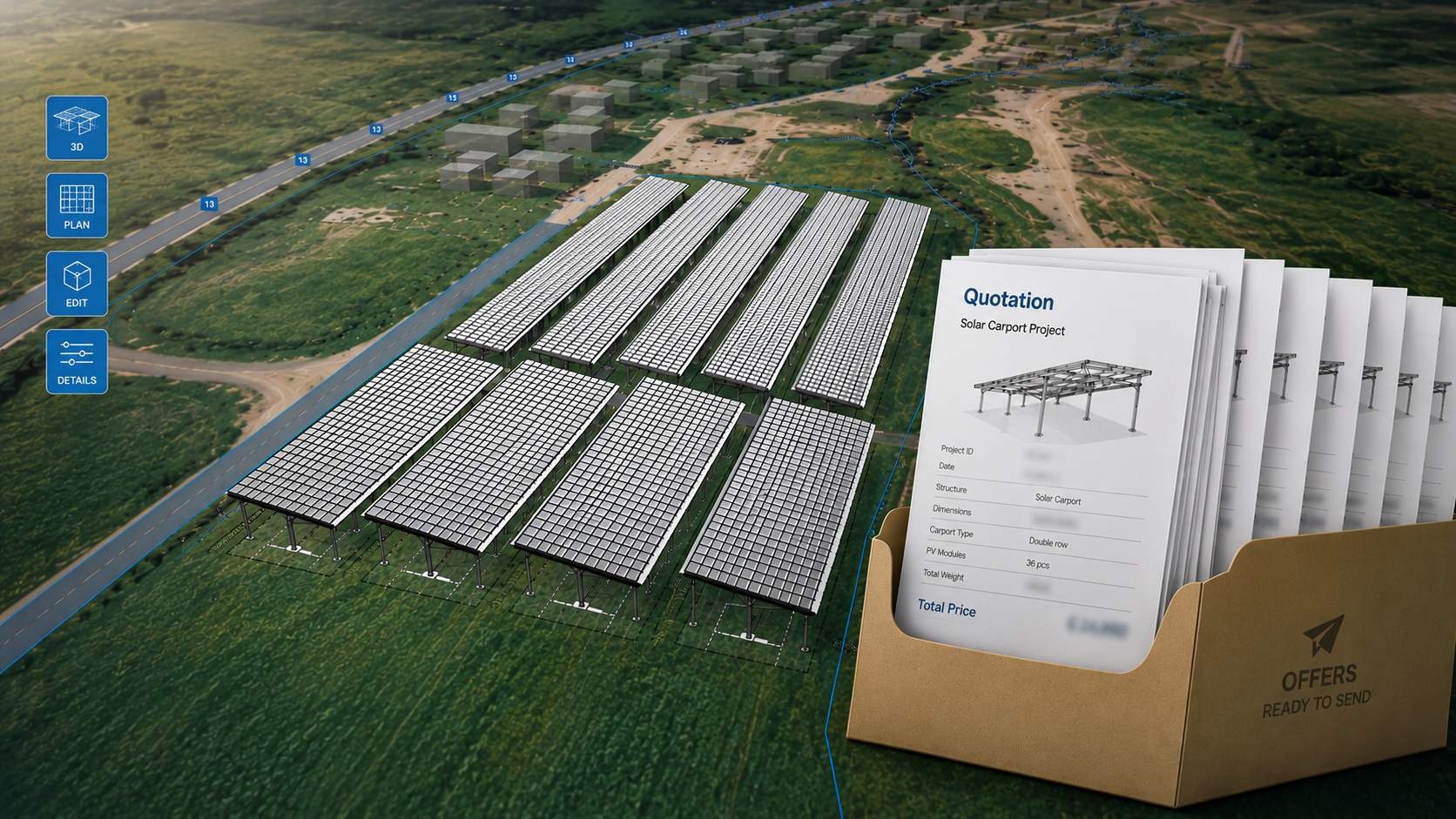
What changed was the amount of repetitive work required before those conversations could happen. The company could handle more enquiries without immediately expanding the office. The same three people became capable of processing a much larger volume of projects.
Why many small manufacturers start looking at tools like this earlier than large companies
Large organisations often have departments that absorb inefficiencies.
Small manufacturers notice them immediately.
A quotation that takes four hours is not an abstract business metric - it is half a working day.
A repeated calculation is not a process issue - it is time that could have been spent speaking with customers or delivering projects.
The solar carport manufacturer from the beginning of this story never wanted to become a software company.
He wanted three people to achieve what normally requires a much larger team.
That was the challenge when we first met.
And that remains one of the most common reasons small manufacturers start looking for new ways to run their business.